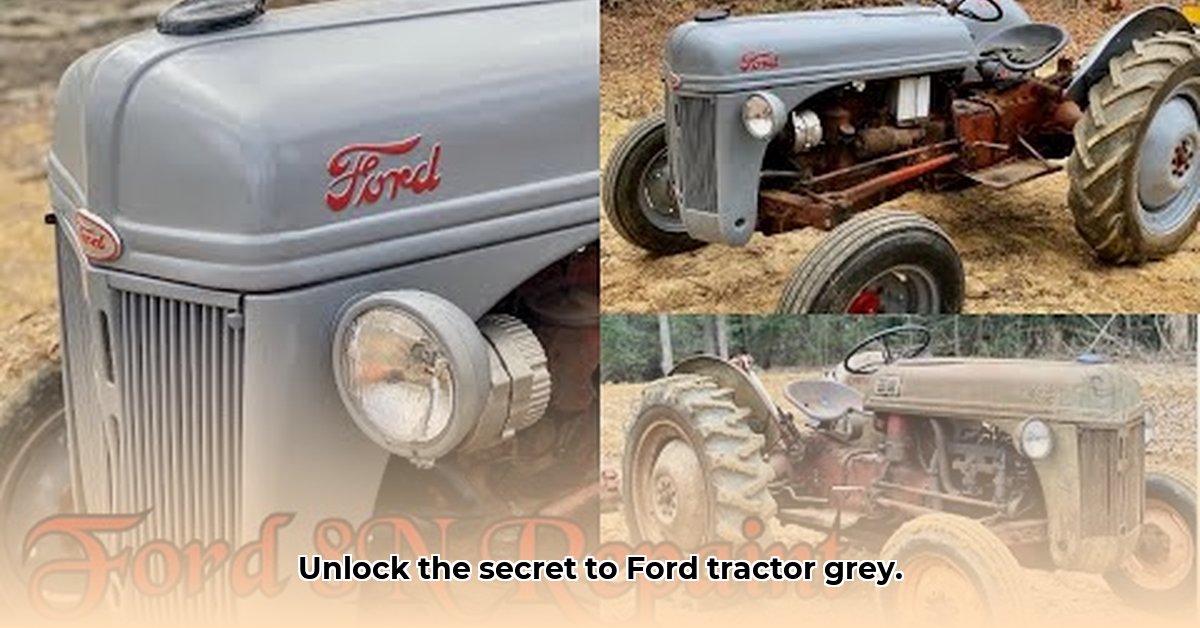
Giving your classic Ford tractor a fresh coat of paint is a rewarding project, but finding the right shade of grey can be surprisingly tricky. This guide will walk you through the process, from identifying your tractor's original color to applying the paint and troubleshooting common issues. Let's get started!
Identifying Your Tractor's Grey
The first step is determining the precise shade of grey for your Ford tractor. Ford used various greys across models and years, each with a unique paint code. Your tractor's serial number and owner's manual are your best resources for finding this code, often starting with "M" followed by a number (e.g., M 13243 for a medium grey). Don't rely on visual comparisons alone; the paint code ensures accuracy. Online forums dedicated to vintage tractors, such as Yesterday's Tractors 1, may have helpful color charts and cross-references. For more restoration tips, check out this helpful resource: restoration guides. Have you ever wondered how many unique grey shades Ford actually used? It's more than you might think!
Sourcing Authentic Paint
Finding the right paint can be challenging. While Tractor Supply offers some Ford colors, they may not have the exact shade you need. Specialized suppliers catering to classic tractor restoration offer a broader range of historically accurate paints. These suppliers often provide cross-references to help translate old Ford codes to modern equivalents from manufacturers like PPG, Tisco, and Van Sickle. When choosing a supplier, consider:
- Color Accuracy: Does the supplier guarantee a precise match to your Ford tractor's original paint code?
- Shipping: Check their shipping policies, paying close attention to regulations in states like California, which may have stricter environmental rules.
- Reviews: Read customer reviews to gauge the supplier's reliability and the quality of their products.
- Return Policy: Ensure they have a reasonable return policy, in case the paint doesn't meet your expectations. Did you know that returning paint can sometimes be a complex process?
Understanding Alkyd Enamel
Most classic Ford tractors used alkyd enamel paint, known for its durability and authentic look. However, it requires careful application.
Advantages:
- Exceptional durability and longevity.
- Deep, rich color for an authentic vintage appearance.
- Relatively easy application for experienced painters.
Disadvantages:
- Requires meticulous surface preparation.
- Strong odor during application (good ventilation is essential!).
- Solvent-based cleanup (proper disposal is crucial).
Surface Preparation: The Foundation for Success
Proper surface preparation is paramount for a long-lasting, high-quality finish. It's the single most impactful step to ensure the final color is accurate and the paint adheres properly. This multi-step process ensures a flawless final coat.
- Thorough Cleaning: Remove all dirt, grease, and loose paint using appropriate degreasers and cleaners. A clean surface is the first step to a perfectly matched color.
- Repairing Imperfections: Address dents, rust, or damage using welding, body filler, and sanding. Achieving a smooth surface is critical for a professional-looking finish.
- Priming: Apply a high-quality automotive primer compatible with your chosen paint. This creates a uniform surface and improves paint adhesion. A good primer is like the foundation of a house – you can't have a good paint job without it.
Painting: A Step-by-Step Guide
- Test Area: Practice on a hidden area before painting the entire tractor. This allows you to fine-tune your technique and ensure the color is correct.
- Thin Coats: Apply several thin coats instead of one thick coat to minimize runs and drips. This results in a smoother, more even finish.
- Even Application: Maintain consistent overlap between coats, both vertically and horizontally. Avoid overloading your brush or spray gun.
- Drying Time: Allow ample drying time between coats per the manufacturer's instructions. Patience is key to a successful paint job.
- Topcoat: Consider a clear topcoat for extra protection and shine.
Troubleshooting Common Problems
- Runs and Drips: Apply thinner coats and use a steady hand.
- Uneven Color: Ensure thorough paint mixing and even application.
- Brush Marks: Use a quality brush and apply light, even strokes, or consider using a spray gun for a smoother finish.
Conclusion
Restoring your Ford tractor to its former glory requires dedication and attention to detail. By carefully following these steps, you can achieve a professional-looking paint job that will last for years to come. Remember, patience and thorough preparation are key to success!